 EN
EN
 EN
EN AR
AR BG
BG HR
HR CS
CS DA
DA NL
NL FI
FI FR
FR DE
DE EL
EL HI
HI IT
IT JA
JA KO
KO NEI
NEI PL
PL PT
PT RO
RO RU
RU ES
ES SV
SV IW
IW ID
ID LV
LV LT
LT SR
SR SK
SK SL
SL UK
UK VI
VI ET
ET HU
HU TH
TH TR
TR FA
FA MS
MS BE
BE HY
HY AZ
AZ KA
KA MN
MN MY
MY KK
KK TG
TG UZ
UZ KY
KY
Kjerneprinsipp: Early, rapid and accurate classification and grading are the critical prerequisites for formulating scientific treatment plans and judging prognosis.


Du er her: Home > Oppløsning > Reparasjon av hudbarriere > Kliniske løsninger for brannskader
 01. Basic Basis for Burn Classification and Grading
 02. Dressing Selection Protocol by Pathophysiological Stage
 03. Specialized Dressing Usage List by Burn Grade in Burn Department
 04. Core Product Advantages of Hairun Dressings
 05. Clinical Application Principles
Kjerneprinsipp: Early, rapid and accurate classification and grading are the critical prerequisites for formulating scientific treatment plans and judging prognosis.

Bruke Chinese Rule of Nines og Palm Methodto calculate TBSA, a key index for severity assessment.

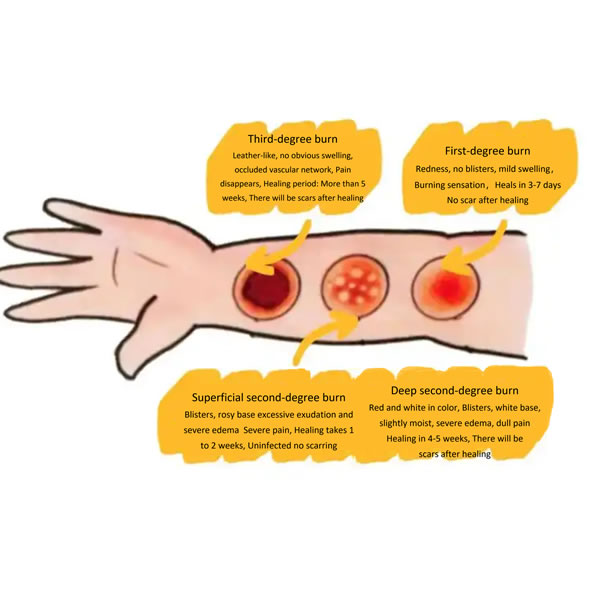
Classify using the "Three-Degree and Four-Classification System" based on tissue damage layers (1st, superficial 2nd, deep 2nd, 3rd).

Comprehensively determined by depth and area, with reference to age, associated injuries, and underlying diseases.

Based on comprehensive assessment, formulate personlige planer including conservative treatment, surgery, and dressing selection.
Systematic evaluation is the cornerstone of effective burn care.
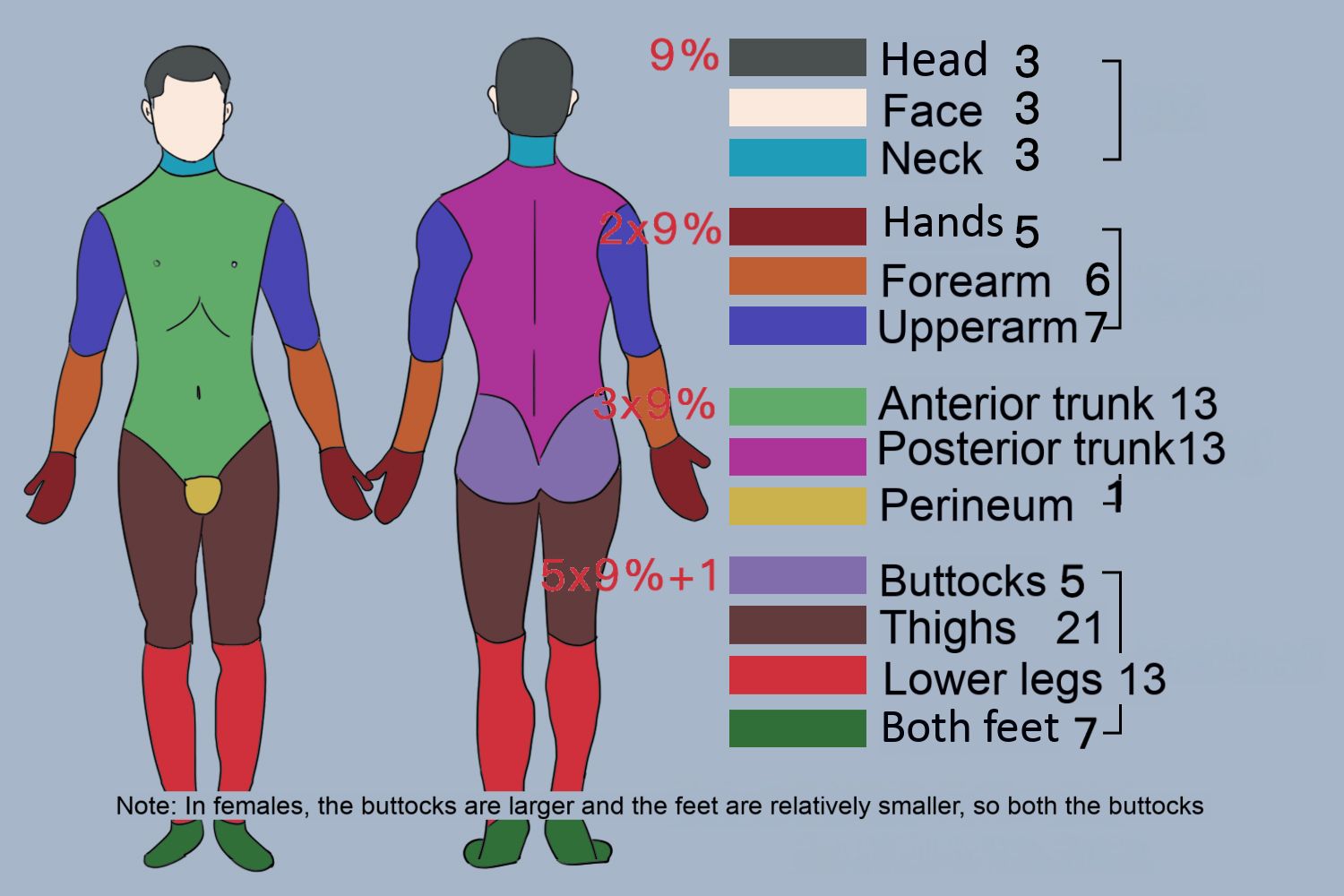
The human body surface area is divided into several equal parts of 9% to calculate the burn area. For adults:
· Head/Neck: 9% | Upper Limbs: 18% | Trunk: 27% | Lower Limbs: 46%
· Total: 11 × 9% + 1% (Perineum)
● Head & Neck: 9% + (12 - Age) → Larger head proportion
● Lower Limbs: 46% - (12 - Age) → Smaller limb proportion
● Trunk & Upper Limbs: Unchanged (3×9% & 2×9%)
 "Accurate area assessment and grading are the cornerstone of successful burn treatment. "
This classification method is based on the depth of tissue damage caused by burns, focusing on the local pathological damage degree of the wound surface. Burns are classified into four main categories:
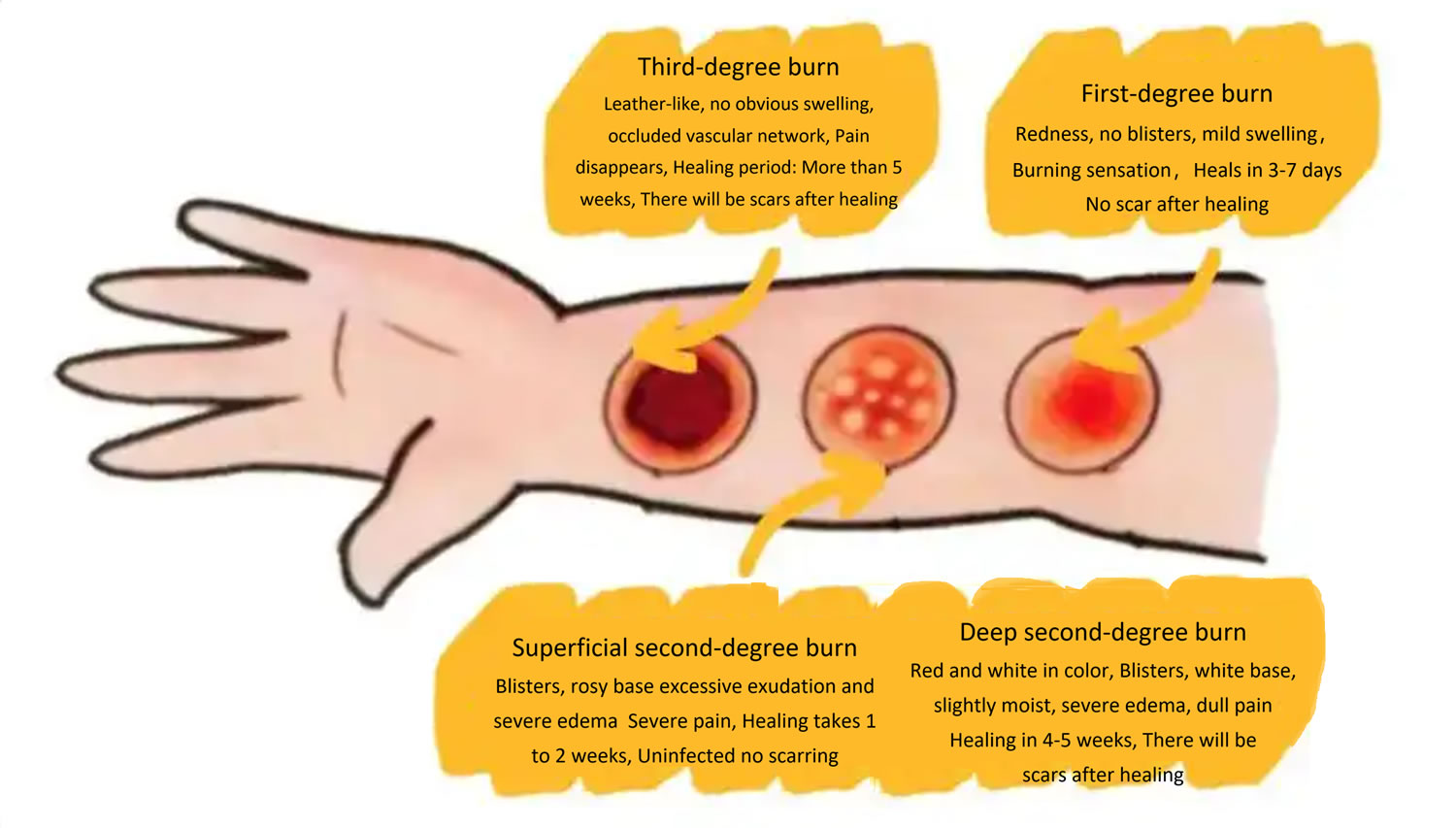
Clinical Significance: Directly guides wound management and dressing selection. It is the core basis for formulating clinical plans for wound care, dressing change, and surgery (e. g. , escharectomy, skin grafting).
Summary: Burn grading is a key index for determining treatment plans and evaluating prognosis.

kriterier:
Superficial 2nd-degree, TBSA < 9%. Local redness, swelling and pain.
Behandling:
Timely wound cleaning and protective ointment application.

kriterier:
2nd-degree (10-30%) or 3rd-degree (≤10%). Requires professional care.
Behandling:
Debridement, disinfection, antibiotics for infection and analgesics.

kriterier:
Total TBSA 30-50% or 3rd-degree > 10%. High risk of complications.
Behandling:
Immediate hospitalization, fluid resuscitation, and wound management.

kriterier:
Total TBSA > 50% or 3rd-degree > 20%. Life-threatening condition.
Behandling:
ICU admission for comprehensive rescue, ventilation support and monitoring.
Key Takeaway: Accurate grading is critical for triage and treatment decisions. Minor burns can be managed with basic care, while severe and critical burns require immediate specialized medical intervention and ICU support to address shock, infection, and multi-organ failure risks.

Priority: Keep wound moist, prevent water loss, maintain internal environment stability.

Goal: Anti-infection, ensure unobstructed drainage, remove necrotic tissue.

Focus: Promote granulation growth, accelerate epithelialization, reduce scar formation.
Dressing selection should not be static. It must be dynamically adjusted according to the wound bed preparation status, adhering to theTIME Principle(Tissue, Infection/Inflammation, Moisture, Edge) for optimal healing outcomes.

Kjernemål: Resolve wound edema, exudation and pain, focusing on basic soothing and protection.

Focus on pain management; use cold compress gel for physical cooling and soothing.

Spray with polymeric liquid dressing, then cover with activated carbon dressing for efficient exudate absorption.

Spray with polymeric liquid dressing combined with silver ion dressing coverage, focusing on infection risk prevention.

Adopt the exposure therapy, combined with silver healing biogel (or silver-zinc cream) for local treatment.
Note: The dressing regimen should be adjusted according to the patient's specific conditions and medical advice.

Kjernemål: Prevent and control wound infection; strengthen antibacterial and anti-infection measures in view of the characteristics of exudate with a large amount of protein and local ischemia.
· Spray with polymeric liquid dressing
· Apply chitosan gel
· Cover with silver ion dressing

· Spray with polymeric liquid dressing
· Apply silver healing biogel dressing
· Cover with silver ion dressing

· After escharectomy
· Apply silver healing biogel & cover with silver ion dressing
· Evaluate skin grafting or conservative treatment

Nøkkelmerknad: The use of silver ion dressings and silver healing biogel is critical in all stages to effectively combat infection.

Kjernemål: Promote wound healing and reduce scar formation; adjust dressings according to the healing status.

Heals in 3-5 days without additional special dressings.

Regimen: Chitosan gel + activated carbon dressing.

Regimen: Spray with polymeric liquid dressing → apply chitosan gel/silver healing biogel dressing → cover with activated carbon dressing.

Early post-op: Silver healing biogel + silver ion dressing. After granulation: Polymeric liquid dressing + chitosan gel + activated carbon dressing.
Note: The choice of dressing should be flexible based on the actual clinical situation and patient's response.

indikasjoner:
Mild erythema, epidermal injury
Anbefaling:
No additional dressings required / or silver healing biogel dressing

indikasjoner:
Blister formation, severe pain, superficial dermis injury
Anbefaling:
Silver healing biogel dressing / silver ion dressing

indikasjoner:
Eschar formation, hypoesthesia, deep tissue injury
Anbefaling:
Functional dressing (oil gauze) / silver ion dressing (oil gauze)
Dressing selection should be flexibly adjusted based on wound exudate volume, infection risk and wound location to ensure a moist healing environment.
| Indikasjoner | Produktnavn | Spesifikasjon |
| Ⅰ degree burn | Cold Compress Gel | - |
| Superficial Ⅱ degree burn | Polymeric Liquid Dressing / Medical Chitosan Liquid Dressing | 15ml |
| Superficial Ⅱ degree burn | Medical Chitosan Gel Biological Dressing | 30g |
| Superficial Ⅱ degree burn | Activated Carbon Fiber Functional Dressing | Ulike spesifikasjoner |

Klinisk merknad: The selection of dressing should be based on the specific condition of the wound and the doctor's advice. Always follow the instructions for use.
| Produktnavn | Spesifikasjon |
| Polymeric Liquid Dressing / Medical Chitosan Liquid Dressing | 15ml |
| Polymeric Liquid Dressing / Active Factor Biological Dressing | 20ml |
| Medical Chitosan Gel Biological Dressing | 30g |
| Silver Healing Biogel Dressing | 30g |
| Silver Ion Antibacterial Functional Dressing | Non-adhesive, various specifications |
| Activated Carbon Fiber Functional Dressing | Non-adhesive, various specifications |
| Scar Relief Ointment | 20g |

Note: Selection of dressing depends on wound condition and clinical judgment.
| Produktnavn | Spesifikasjon |
| Silver Healing Biogel Dressing | 30g |
| Silver Ion Antibacterial Functional Dressing | Non-adhesive, various specifications |
| Polymeric Liquid / Medical Chitosan Liquid Dressing | 15ml |
| Medical Chitosan Gel Biological Dressing | 30g |
| Activated Carbon Fiber Functional Dressing | Non-adhesive, various specifications |
| Scar Relief Ointment | 20g |

Core Strategy Summary: For severe burns, in addition to conventional antibacterial and repair dressings, polymeric liquid dressing with active factorsshould be the focus for deep second-degree burns to promote deep tissue healing; for third-degree burns with deeper tissue damage, a combination of multiple functional dressings and post-operativeScar Relief Ointmentis required for comprehensive intervention to prevent severe scar hyperplasia.

Exclusive patented formula for efficient wound repair.

Supported by multi-center clinical data with high safety.

Non-irritating, comfortable and convenient to use.
HAIRUN MEDICAL | Focus on Wound Care and Repair
Applicable to burn wounds of all areasand types; also suitable for variouswound infections such as pressureulcers and surgical wounds.
Integrating hemostasis, bacteriostasis, wound protection, wound healingpromotion and scar reduction, providing all-round protection.
Adopting oil-in-water formula withsmooth texture and stable pH value, ensuring active ingredients act longeron the wound.
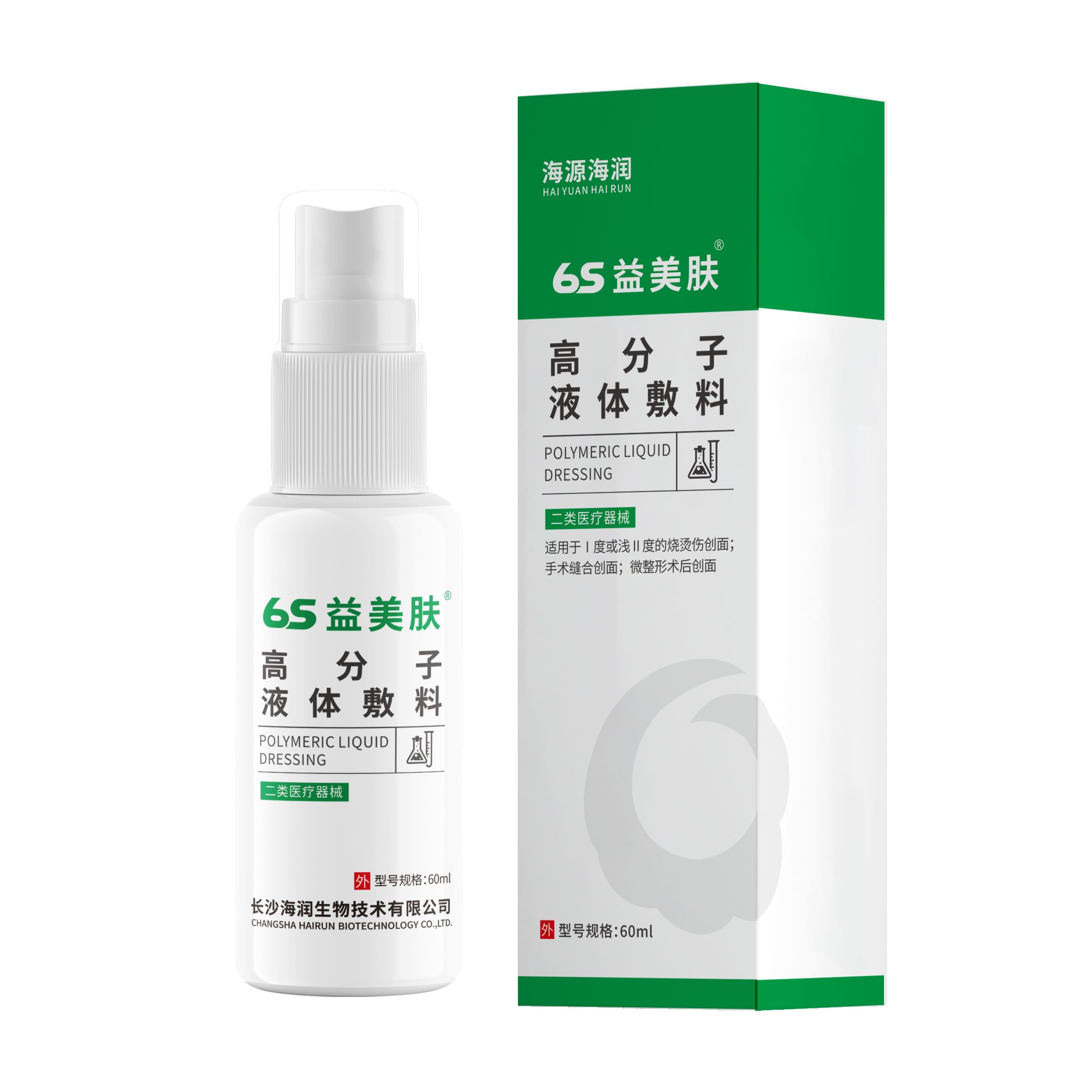
Klassifisering
Class Ⅱ Medical Device
Indikasjoner
Grade Ⅰ or superficial grade Ⅱ burn/scald wounds; surgical suture wounds; post-minimally invasive plastic surgery wounds.
Produsent
Changsha Hairun Biotechnology Co., Ltd.
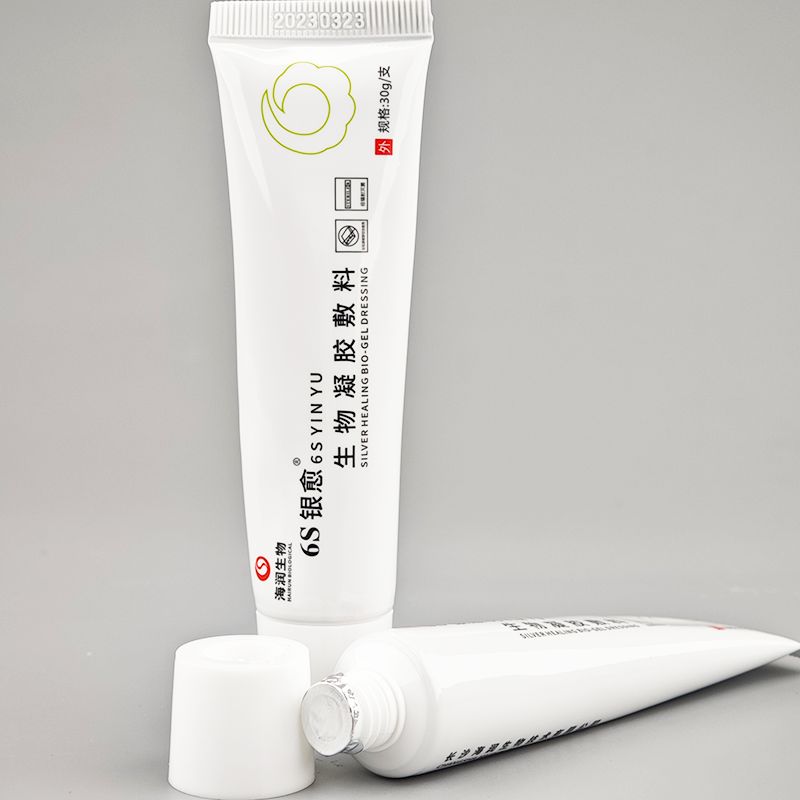
Bred klinisk anvendelse
Applicable to burn wound infections, gynecological inflammation, andsurgical incision infections.
Høy sikkerhet
ressings. SterilizedSafer than silver o1, ensuring productby Co60 irradiatiolinical use. sterility and safe c
Strong Antibacterial Activity
Bacteriostatic rate > 50% against E. coli, Staphylococcus aureus &Candida albicans. Superior tochitosan gels.
A versatile, safe, and effective solution for treating infected wounds.
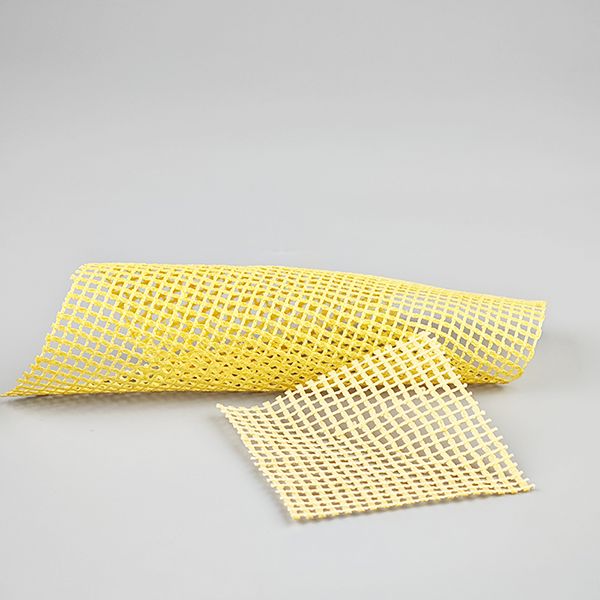
Non-adhesive with multiple specifications. Ideal for antibacterial protection of deep burns in the infection stage, fitting the wound without irritation.
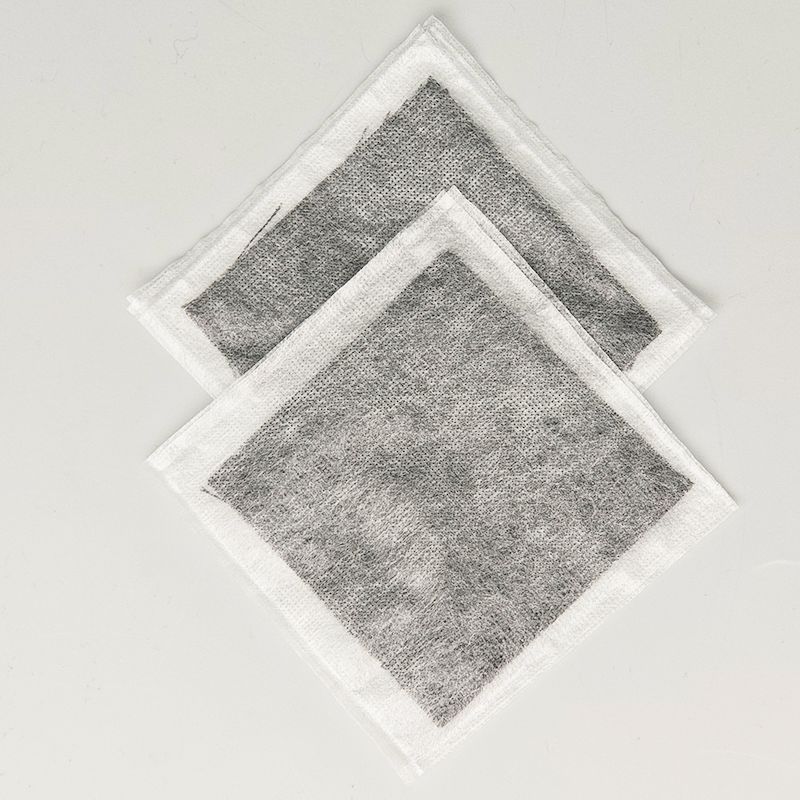
Available in adhesive/non-adhesive types. Efficiently adsorbs wound exudate and creates an optimal dry healing environment.
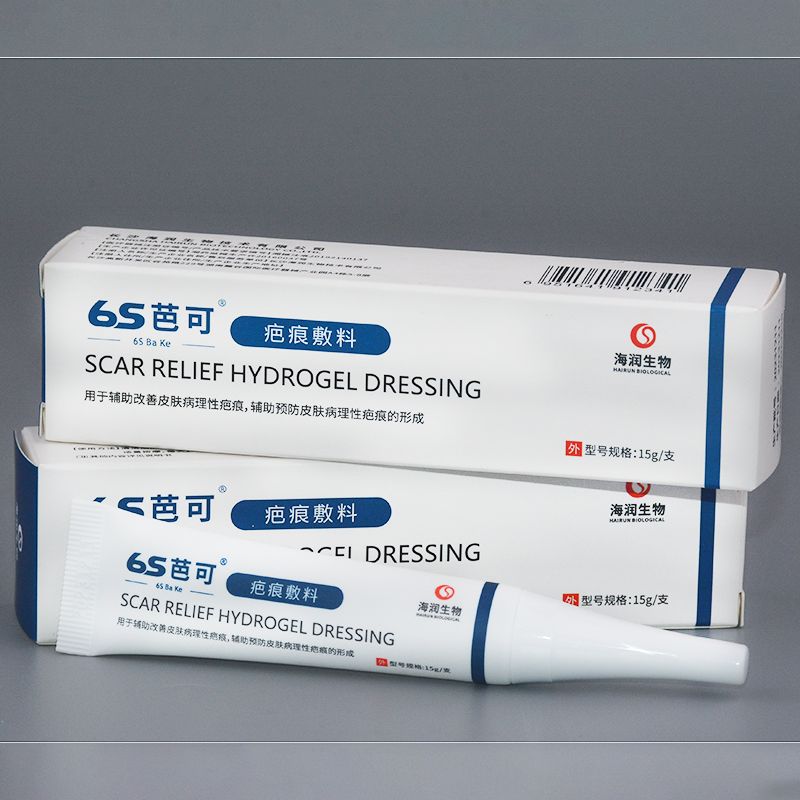
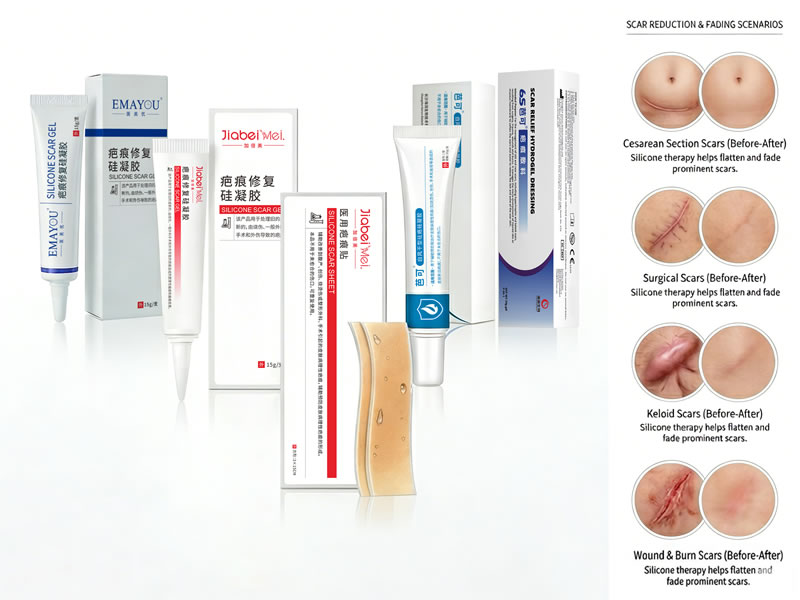
Targets deep second/third-degree burns. Post-operative use of ointment/hydrogel can significantly reduce scar hyperplasia.

Dressing selection must be flexibly adjusted according to the actual wound conditions (exudate volume, infection degree, granulation growth status), avoiding mechanical application of protocols.
For third-degree burns, surgical indications (escharectomy, skin grafting) must be prioritized for evaluation; dressings are only used as an auxiliary post-operative nursing measure.

If infection worsens in superficial/deep second-degree burns, antibacterial dressings should be upgraded in a timely manner, combined with systemic clinical anti-infection treatment regimens.

During dressing use, closely monitor the condition of the skin around the wound and change dressings timely according to exudate volume to avoid secondary infection.
Key Takeaway: Adhere to these principles to optimize wound healing outcomes and minimize complications.
Hairun dressings provide a complete phased and graded solution for the burn department. Its professional product portfolio and clear application guidelines help improve the quality of burn wound care, promote wound healing, reduce scar formation, and provide strong support for clinical treatment.

Phased and graded management for scientific wound care.
Clear guidelines for standardized operation.

Promote wound healing and reduce scar formation.
 Populære Nyheter